Sunday, December 22, 2013
Fort House Ruins - BW
Ruins of one of the officer's home. Fort Union National Monument, NM January 25, 2012
Canon EOS Rebel T1i f/5.0 at 1/2000 sec Aperture Priority 18.0 mm ISO 200 Three bracketed exposures (+2.0, 0.0, -2.0 EV) Processed from RAW by HDR Darkroom 2 Pro with further processing and conversion to greyscale with Photoshop Elements 11
Labels:
building,
grayscale,
National Park,
New Mexico,
ruins
Tuesday, November 19, 2013
Inside Bents Old Fort
Inside Bents Old Fort National Historic Site near La Junta, CO January 25, 2013
Canon EOS rebel T1i with Tamron 10-24mm wide angle lens f/9.0 at 1/100 sec 11.0mm ISO 100 Three bracketed exposures (+2.0, 0.0, -2.0 EV) Processed from RAW with HDR Darkroom 2 Pro and further processing by Photoshop Elements 11
Mechanics Corral - Pano
Panoramic photo of the Mechanics Corral at Fort Union National Monument, NM January 25, 2012
Canon EOS Rebel T1i f/5.0 at 1/1600 sec Aperture Priority 18.0mm ISO 200 Three bracketed exposures (+2.0, 0.0, -2.0 EV) processed from RAW with Photomatix Essentials 3.2 with fishing processing with Photoshop Elements 11.
Monday, November 18, 2013
Camera Setting Errors
As I have been posting photos here on the blog, I have noticed that I have used some strange setting combinations. If you look at the setting details under the photo, you will see some of them.
I have taken photos with shutter speeds of 1/500, apertures of F/4.0 and ISO 800, for example. Shot after shot will be at EV 0.33. I attribute these from not taking time to properly set the camera and unfamiliarity with the new camera.
Unfamiliarity with the camera is the easier problem to rectify. It just takes time and shooting until it becomes second nature. With the current kit (body with Tamron 18-200mm lens), the 60D is the camera I use most.
My EOS Rebel T1i has become my back-up camera. I am considering having my original Rebel converted for IR photography.
Now, as for the settings problems. A couple things have masked problems with my final photos. The purchase of the 60D was primarily for the better frame rate for shooting mountain bike race photos. I set the camera for recording both RAW and L jpg. I would shoot every rider at basically the same place on the the trail, there were little changes needed. All I needed to do was to tweak the RAW image and convert to jpg.
The other photos I take are mostly landscapes. For landscapes, I prefer bracketed exposures and HDR processing. The processing software also masks camera setting problems (or should I say "errors"). I can get some damn good results adjusting the sliders in the software. But, I am sure I could get better results if I took the time a properly set the camera (or at least verified the settings) before taking the shot.
Finally, by taking the time to evaluate the photo and read the EXIF data, I can learn from my mistakes.
Artists Point View
Another view of the Lower Falls of the Yellowstone River from Artist's Point, Yellowstone National Park, WY August 29, 2013
Canon EOS 60D with Tamron 18-200mm lens f/8.0 at 1/160 sec Aperture Priority 28.0mm ISO 160 Three bracketed exposures (+1.67, -0.33, -2.33 EV) processed from RAW by HDR Darkroom 2 Pro and further processing by Photoshop Elements 11
Sunday, November 17, 2013
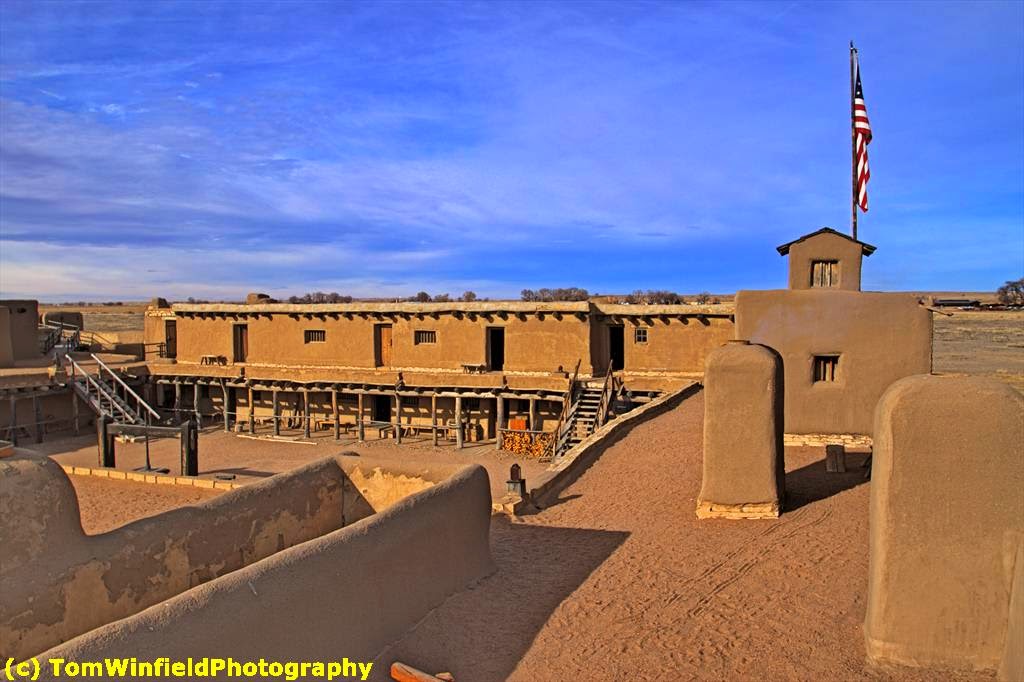
Bent's Second Floor
View from the second floor of Bent's Old Fort National Historic Site, Colorado January 25, 2013
Canon EOS Rebel T1i f/6.3 at 1/500 sec Aperture Priority 18.0 mm ISO 100 Three bracketed exposures (+2.0, 0.0, -2.0 EV) processed from RAW by HDR Darkroom 2 Pro and further processing by Photoshop Elements 11
Stratification
Rock stratification - North Unit, Theodore Roosevelt National Park, North Dakota August 21, 2013
Canon EOS 60D with Tamron 18-200mm lens f/11.0 at 1/200 sec Aperture Priority 31.0 mm ISO 100 Three bracketed exposures (+1.67, -0.33, -2.33 EV) Processed from RAW by HDR Darkroom 2 Pro. Further procession with Photoshop Elements 11
Subscribe to:
Posts (Atom)